
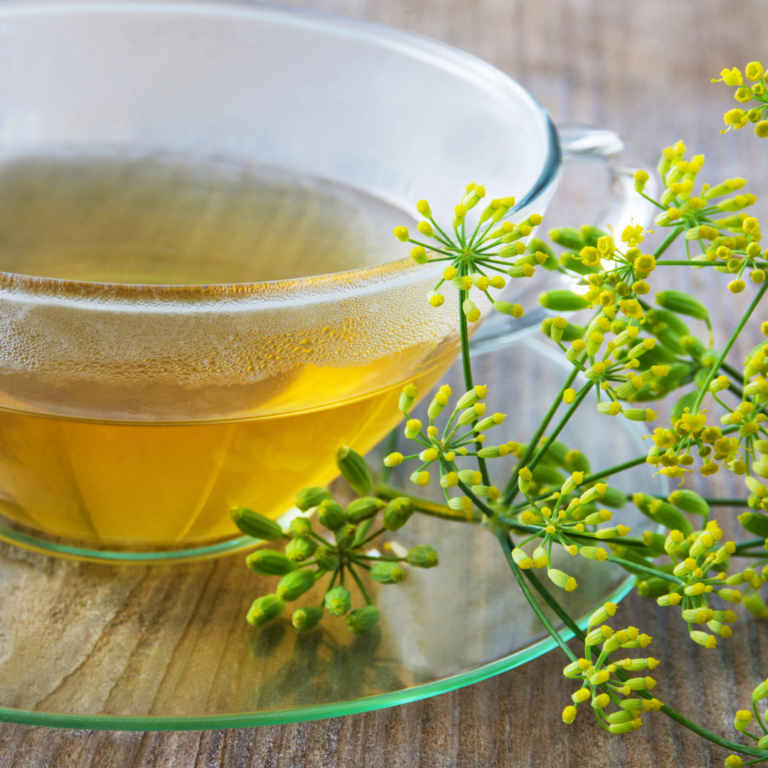
Although ginger and fennel are great for all sorts of sicknesses that pop up, they’re often best known for easing digestive discomfort.
To start, ginger comes from a flowering plant originating in Southeast Asia, and its Latin name is Zingiber officinale. The part of the plant used as a culinary spice and medicinally is the rhizome, or the underground part of the stem. Its taste is spicy, pungent, and aromatic.
Ginger helps to relieve nausea and bring warmth and blood flow to the digestive tract, making it a great herbal ally for someone who has an upset stomach, a stomach bug, or “cold”/slow and incomplete digestion that causes gas, bloating, or constipation.
It’s also antimicrobial against common bacteria that cause stomach bug symptoms, and it’s considered a warming diaphoretic—so it’s perfect for fighting off stomach bugs and supporting a healthy fever response to those infections.
Fennel seeds, on the other hand, come from the fennel plant whose Latin name is Foeniculum vulgare. The seeds are tiny, greenish-brown, and oval-shaped, and taste sweet, aromatic, and slightly pungent.
These seeds are well-known for their carminative action, which means they help relieve or prevent gas in the digestive tract—allowing trapped gas to be released and alleviating any bloating, belly pain, and cramping caused by that pressure. (This is also why fennel is traditionally loved for soothing infant colic—either enjoyed by nursing mothers so it passes through the breast milk or given in tiny spoonfuls to babies!)Together, they make an incredible, synergistic blend to target gut discomfort from all angles!
Note: You may need to adjust to your taste preference. You might find you want a stronger ginger flavor or a sweeter fennel taste. I personally often do a little more ginger than fennel—the best way to figure out how you like it is to experiment!
Step 1: Prepare a kettle with boiling water. Add 1–2 tsp of fennel seeds and 1–2 tsp of dried ginger root into a tea strainer placed in a medium-sized mug.
Step 2: Pour about 8–10 oz of hot water into the mug, cover it with a small saucer or lid (this traps in all those potent volatile oils!), and let it steep for 15–20 minutes.
Step 3: Strain once it’s done and sip when cool enough. Feel free to stir in a little raw honey (for children over 1 year) or a squeeze of fresh lemon to soften ginger's natural spice for younger palates.
How to drink it: Adults can drink 1–4 cups a day and children can drink 0.5–2 cups a day. If you find you get bloated often with meals, you can drink the tea 15–20 minutes before or after eating. Otherwise, sip as needed throughout the day when symptoms pop up.
Having dried ginger root and whole fennel seeds tucked in your pantry means you're never caught off guard when a late-night stomach bug or upset tummy hits. It’s an inexpensive, deeply comforting remedy that teaches our kids to listen to their bodies and turn to simple, nourishing plants first.
Brew a cup, wrap your hands around the warm mug, and let the gentle warmth do its work!